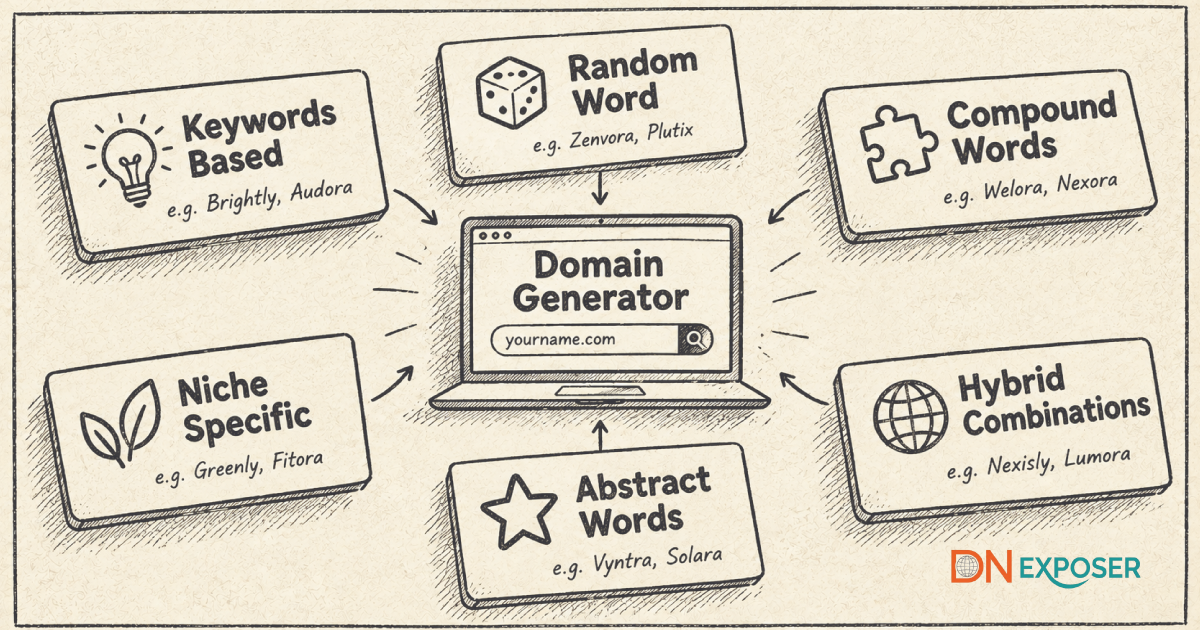
You ran your idea through a brandable domain name generator, exported two hundred candidates, and not one of them sounds like a company you would put on a contract. That is the normal outcome, and it is not a tool failure. It is a category failure: most founders treat generator output as a shortlist when it is raw material.
The cost of that confusion is real. A launch slips because the name everyone agreed on is registered and nobody checked. A brand ships on a name that cannot be said over the phone. A trademark conflict surfaces after the logo is paid for. We work through naming briefs with founders, and the same six tool categories keep producing the same six blind spots. Here is what each one does, where each one stops, and how we filter what comes out.
What a Brandable Domain Name Generator Actually Produces
A brandable domain name generator produces candidate strings, not finished brands. Most tools output three different things at once: invented words, word combinations, and domains that are genuinely registrable or already listed for sale. Only the third group is something you can own today. Confusing the three is why generated lists feel long and useless.
Two definitions before we go further. A domain is registrable when no one holds it and you can register it at a registrar, the company that records the registration. A domain is aftermarket when someone already owns it and any acquisition runs through that owner, usually at a price set by them. A generator that ignores this distinction is showing you names in two completely different price universes on the same screen.
The third thing to watch is the extension, or TLD, the part after the dot. Many tools pad a list with alternative extensions to make an unavailable word look available. The word did not become free. The tool changed the question.
The 6 Brandable Domain Name Generator Types, Reviewed
We review these as categories, not as products. Tools change quarterly. The method behind them does not, and the method is what determines the failure mode you inherit.
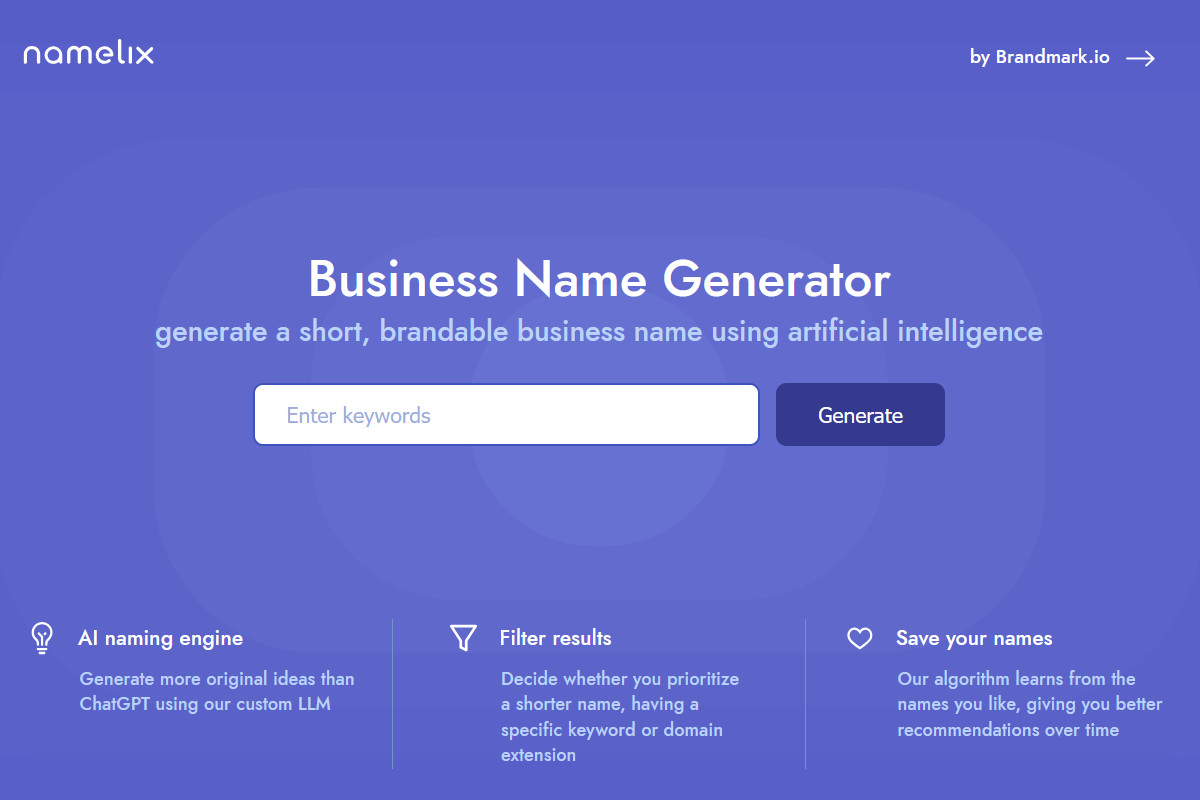
Random Coined Word Generators
These build invented words from syllable patterns: a consonant cluster, a vowel, a familiar ending. The output reads as a name because it obeys English phonotactics, the rules that decide which sound sequences feel sayable. Distinctiveness is the whole proposition here.
What works in practice:
- Coined words clear availability far more often than real words, because nobody registered them first.
- A coined name carries no sector meaning, which keeps the brand free to pivot.
- Distinctive invented marks are generally the strongest category to protect, though that assessment belongs with a trademark attorney.
Where this approach falls short:
- You buy every ounce of meaning with marketing spend. The name says nothing on its own.
- Output volume hides a narrow range. Fifty coined candidates often use six underlying patterns.
- Many fail the phone test: say it once, and the listener cannot spell it back.
Compound and Keyword Blend Generators
These join two real words, or splice one into another, to keep a thread of meaning. This is where most founders start, because the results are immediately legible.
What works in practice:
- A compound tells a first-time visitor what you do before they read a line of copy.
- Spelling is usually unambiguous, which shortens onboarding for a sales team.
Where this approach falls short:
- The more descriptive a name gets, the more it resembles names already used in the same sector.
- Descriptive terms are typically harder to protect as a brand than distinctive coined ones, a question for an attorney rather than a tool.
- Compounds lengthen fast, and length is the quiet killer of recall.
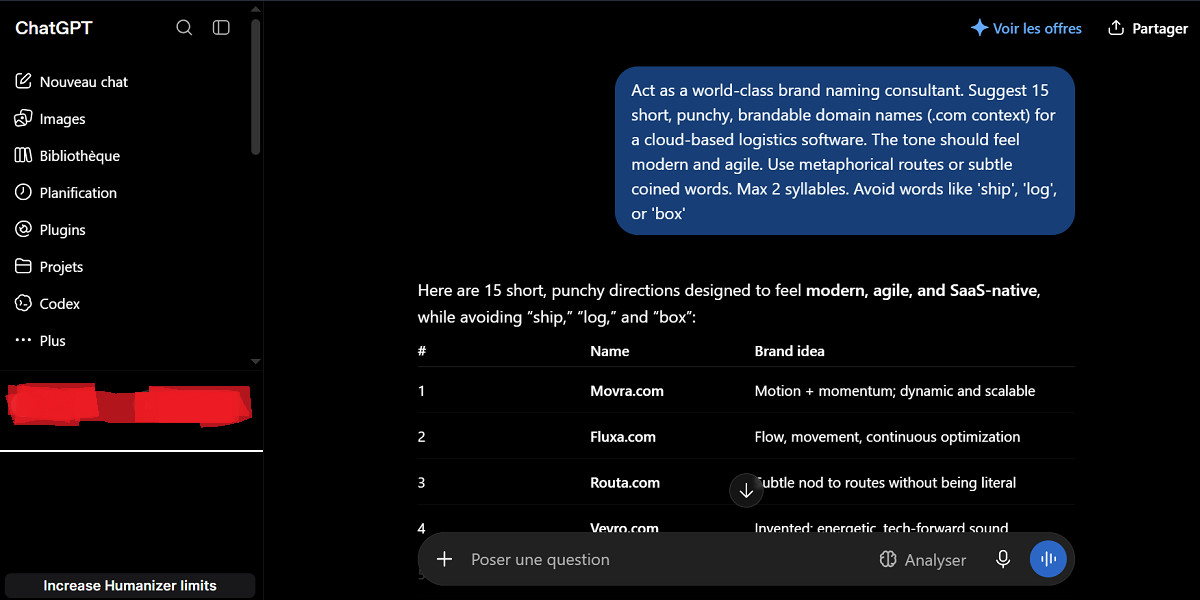
AI Prompt-Based Generators
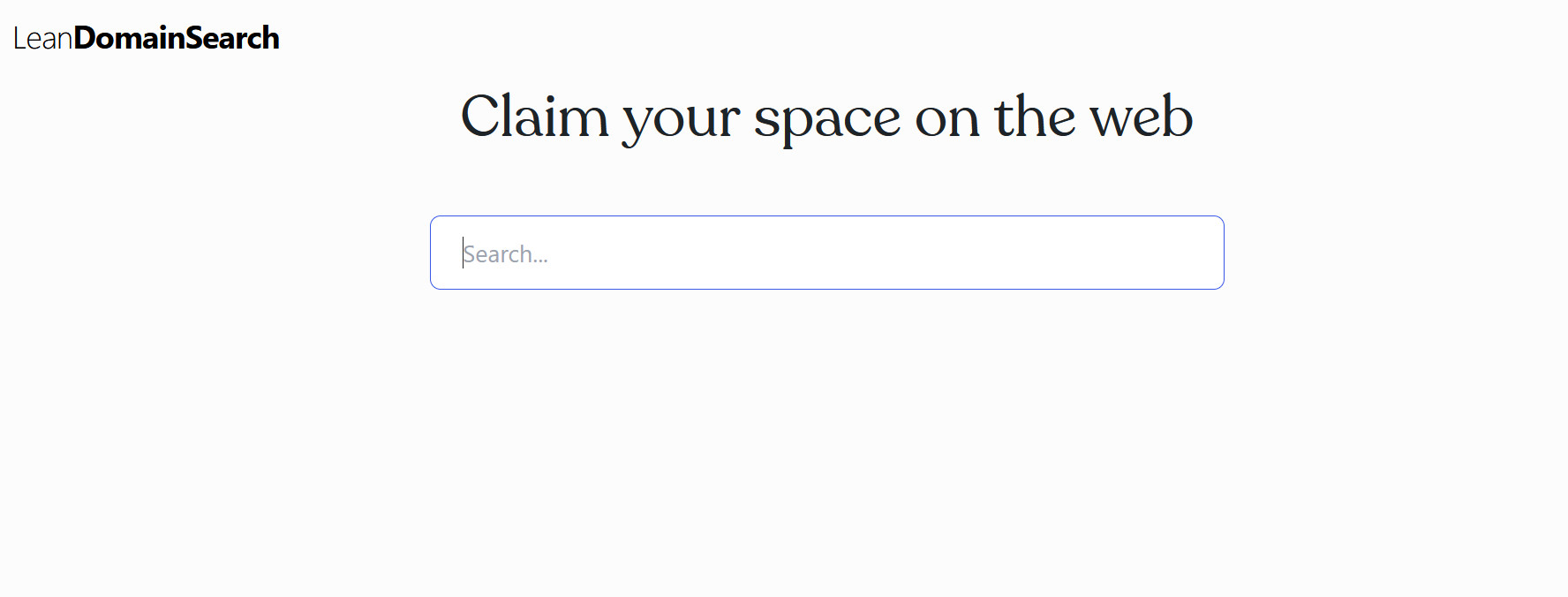
You describe the company and the model returns names. Quality tracks the brief almost exactly. A vague prompt returns the industry average, because that is what the training distribution contains.
What works in practice:
- Constraints are respected: syllable count, tone, sector, the sounds you want to avoid.
- It produces angles a human brief misses, particularly metaphorical routes.
Where this approach falls short:
- Availability claims in the output are frequently stale, so every candidate still needs a live check.
- The model has no view of trademark status, and no view of what the name will cost if it is taken.
- Fluent output invites over-trust. It reads finished when it is not.
We used to send founders the longest list we could generate, on the theory that volume beats precision. It does not. We now cap the shortlist before the founder ever sees it, because a long list postpones the decision instead of making it.
Registrar-Attached Suggestion Engines
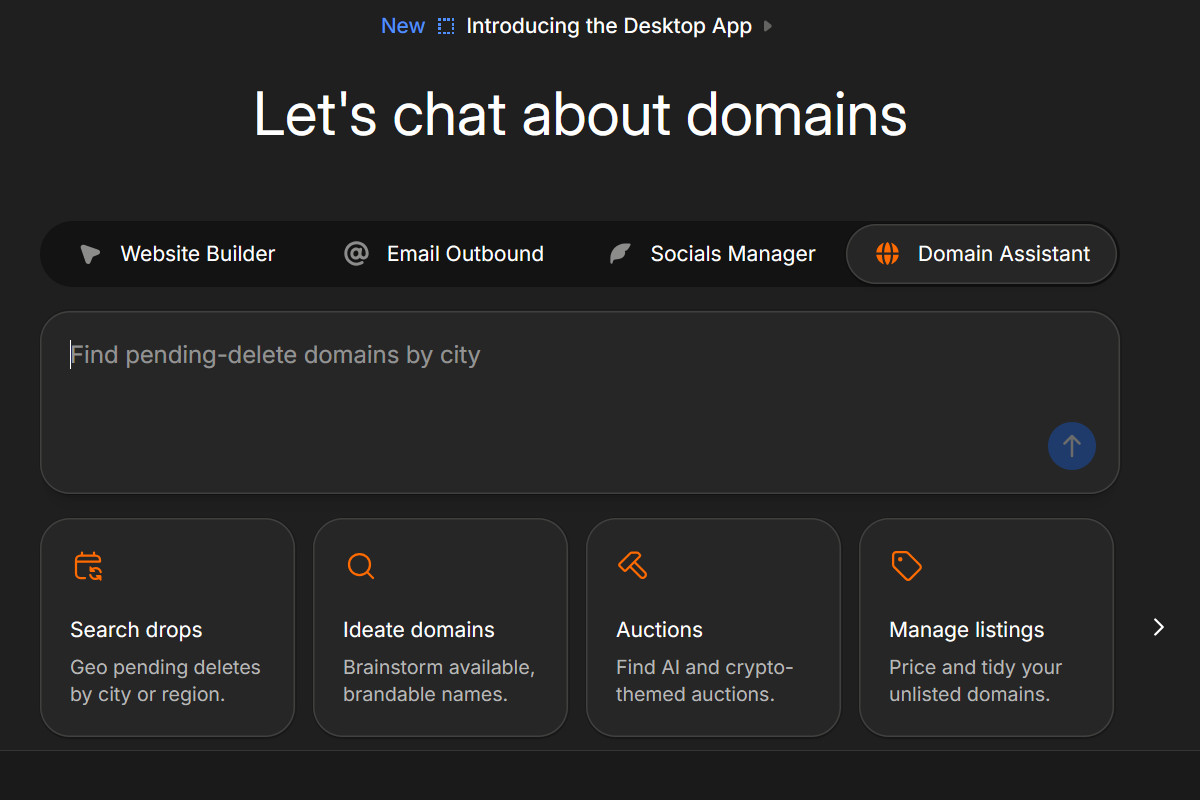
These sit next to a search box and suggest alternatives when your first choice is taken. The suggestion set is bounded by one thing: what is unregistered right now.
What works in practice:
- Everything shown can be registered immediately, which removes the acquisition question entirely.
- It is the fastest route from idea to owned asset when speed matters more than the name.
Where this approach falls short:
- Availability filtering pushes output toward longer strings, prefixes like "get" or "try", and alternative extensions.
- The engine optimizes for a completed checkout, not for a brand you will still want in five years.
Aftermarket and Curated Domain Discovery Tools
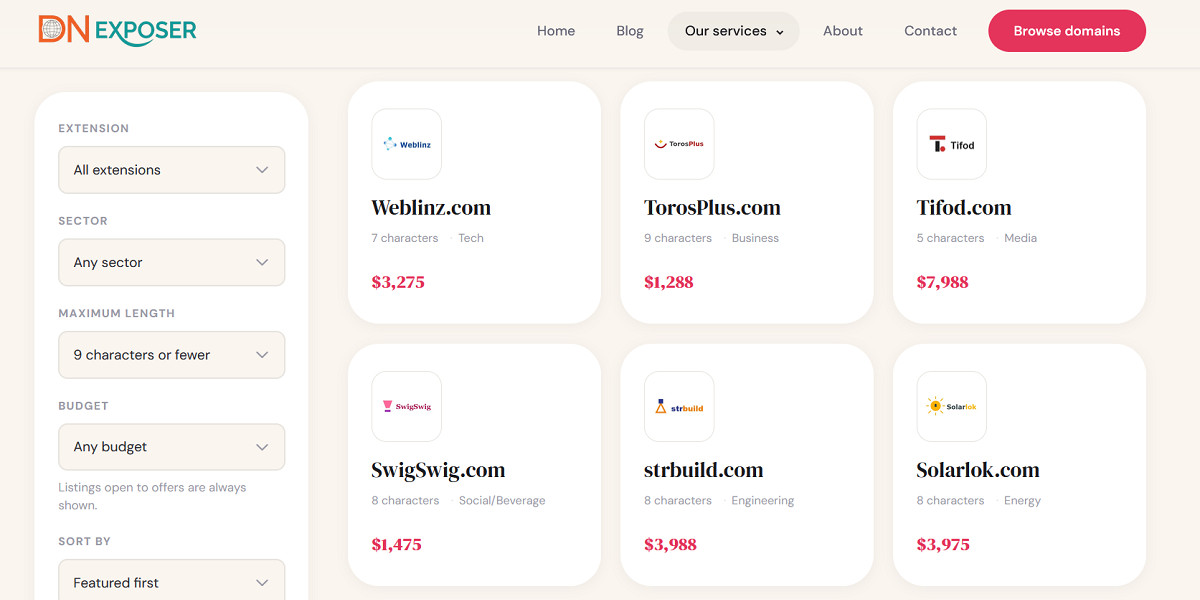
These do not invent much. They surface names that already exist and are offered for sale, which is a different activity wearing the same interface. This is where founders asking where to get brandable domain names usually end up.
What works in practice:
- What you see is acquirable, with a stated price or an inquiry path, so the budget conversation happens immediately.
- Curated inventory has usually been filtered on length, pronounceability and extension before you arrive.
Where this approach falls short:
- Prices reflect the seller's position, not a valuation of your business, and market conditions govern the outcome of any negotiation.
- Listing does not mean cleared. History, disputes and trademark exposure still need checking.
Our own curated brandable domain marketplace sits in this category, and if a name on it fits a brief we are happy to say so plainly. If you want the brief written first, that is what our brand naming consultation is for.
Lexical, Root and Foreign-Language Generators
These pull from Latin and Greek roots, modified real words, and vocabulary from other languages. It is the most controllable category, because you choose the meaning first and the sound second.
What works in practice:
- You get meaning and distinctiveness in the same name, which the first two categories force you to trade.
- Root-based names age well and scale across product lines.
Where this approach falls short:
- A word that is neutral in one language can be unusable in another, and a U.S. launch today is often an export tomorrow.
- Foreign spellings break the phone test for American customers more often than founders expect.
- Existing marks may already sit on the same root in your sector. That is a clearance question for an attorney.
The 5 Tests We Run on Any Generated Shortlist
This is the filter, applied in order. A name that fails an early test does not reach the later ones.
- Length and syllables. We hold candidates to 15 characters and one to three syllables, no hyphens, no digits.
- The phone test. One of us says the name once. The other spells it back. No second attempt.
- The sector read. We ask three people outside the project what the company sells. The name should read as sector-neutral or point to one clearly identifiable sector, never to a confusing third thing.
- Live status. We check registration status at the moment of the shortlist, not at the moment of generation, and we record whether the name is registrable or aftermarket.
- Clearance path. We run a preliminary look using the public search tools at the USPTO's trademark basics resources, which explain why searching for similar marks matters before committing to a business name. This is a screen, not an opinion. Clearance belongs with an attorney.
What No Brandable Domain Name Generator Can Do for You
A generator can produce candidates. It cannot tell you whether a name is commercially appropriate for the market you are entering, and it has no standing on the legal question at all.
Ownership itself is a process, not a status the tool confers. ICANN's guidance for domain name registrants sets out registrant rights and responsibilities, including the obligation to keep contact data accurate and the renewal duties that keep a name under your control.
The dispute dimension is the one founders discover last. WIPO's guide to the UDRP explains how the Uniform Domain Name Dispute Resolution Policy, the ICANN procedure for contested registrations, connects domain names to existing trademark rights. A generator that hands you a name close to an established mark has handed you a liability, not an asset.
From a Generated List to a Name You Own
Registrable names close quickly. You register at a registrar, and the ICANN explanation of the domain name registration process covers the registration agreement, fees, transfers and renewals you are agreeing to.
Aftermarket names are a negotiation. You approach the owner, you support a number with dated comparable sales rather than an automated appraisal, and you close through escrow, a neutral third party that holds the funds until the transfer completes. Expect a transfer lock, the registrar-side hold that blocks a move for a set period after certain changes, and expect to need an EPP code, the authorization string that releases the name to the new registrar. No approach guarantees an acquisition. Market conditions and the seller's own position govern the outcome, and any trademark or legal question belongs with an attorney, not with a broker.
Before you commit, settle three things in writing: who currently controls the registrar account, whether the name has any dispute history, and how the transfer will be executed. If the answer to any of the three is unclear, the price is not the problem. For the full evaluation framework behind all of this, our pillar guide on what makes a domain name brandable works through the criteria in order.
Your next step: take your generated list, run the five tests above, and see how many names survive. If two or three do, you have a real shortlist. If none do, the names that pass those tests are the ones we curate on the DN Exposer brandable domain marketplace, already filtered for length, pronunciation and extension, with an inquiry path on every listing. Bring us the brief and we will tell you honestly whether anything on it fits.